
The FNSKU will not scan
Covered UPC, curved surface, low-dpi print, or tape laid over the label. A scanner that fails once sends the carton to problem solve.
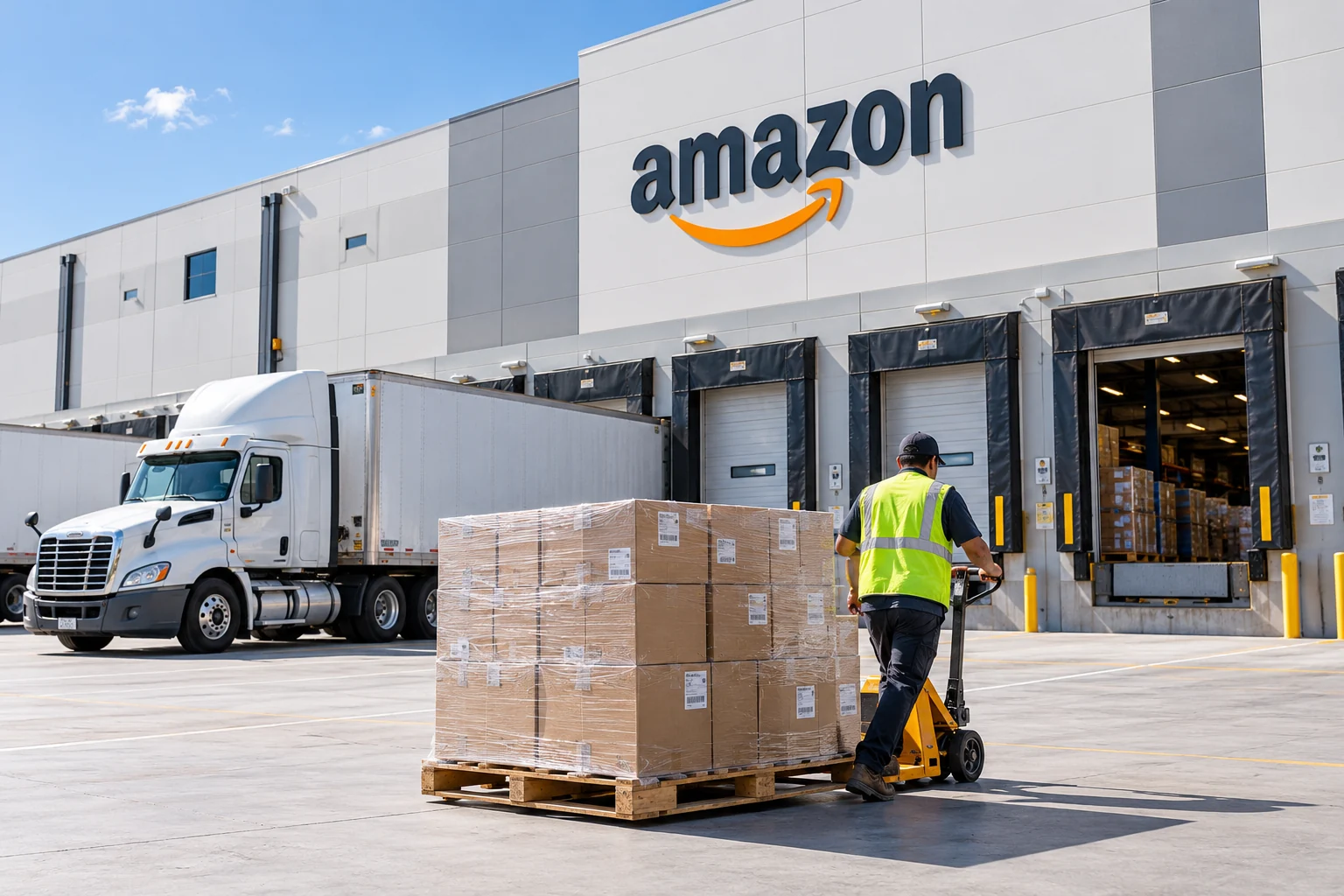
Service · Amazon FBA
Door to fulfillment center: supplier pickup, export clearance, ocean or air freight, US import clearance and the FC delivery appointment — booked once, followed by one team, with the prep finished before the carton is sealed.
Since 1 January 2026 Amazon no longer offers FBA prep or item labelling in the US store. Every unit now has to arrive compliant, which moves the work — and the risk — to the origin side of the shipment.
That is the practical difference. A carton that reaches the dock with a covered barcode or an overweight box is refused as freight, not corrected as a favour. Doing the prep at origin also costs less: most China prep quotes land between USD 0.08 and 0.60 per unit depending on scope, against USD 0.75–1.50 at a US prep centre for the same work.
China prep
USD 0.08–0.60 / unit
US prep centre
USD 0.75–1.50 / unit
Seven checks cover most categories. Each one is done at our Shenzhen warehouse and photographed before the carton is closed — including goods collected from several suppliers and consolidated into one shipment first.
| Item | What Amazon checks | What happens at our warehouse |
|---|---|---|
| FNSKU label | One label per unit, covering the factory UPC or EAN, flat and scannable on the first pass | Printed at 300 dpi on thermal stock, applied away from seams and curves, then scan-tested by hand |
| Poly bag | 1.5 mil minimum, sealed, no more than 3 in past the product, barcode readable through the bag | Bagged and sealed; the barcode stays visible or is reprinted on the outside of the bag |
| Suffocation warning | Required on any bag with an opening of 5 in (12.7 cm) or more, printed on the bag | Pre-printed bags in stock; the warning is never a sticker that can peel off in transit |
| Bubble wrap | Fragile units fully covered and able to pass a three-foot drop test | Wrapped to the drop test, with the label left uncovered |
| Sets and bundles | Marked as a set, sealed so units cannot separate, one bundle FNSKU over the individual barcodes | Shrink-wrapped or banded, single label applied, individual barcodes covered |
| Expiration dating | Check expiry date and remaining shelf life against the product category and current Amazon requirements | Batch checked before packing; short-dated stock is flagged before it ships, not after |
| Origin marking | CBP requires a country-of-origin mark on the unit or retail packaging (19 CFR Part 134) | Checked against the sample — “Made in China” applied if the retail box is missing it |
Category rules stack on top of this list. Sharp goods, liquids, apparel, food and oversize units each carry extra requirements — send the product category with the quote request and we confirm which rows apply before anything is packed.
The limits below are enforced at the dock. Cartons are weighed and labelled against them before they leave the warehouse.
| Standard maximum weight | 50 lb (22.7 kg) |
| Single unit 50–100 lb | Team Lift label on all sides |
| Single unit over 100 lb | Mechanical Lift label |
| Maximum side, standard-size | 25 in (63.5 cm) |
| Box condition | New, rigid, six-sided |
| Void fill | Contents must not shift |
| Ocean freight | Double-wall board, not single-wall |
| Pallet size | 40 × 48 in GMA, four-way entry |
| Maximum height | 72 in including the pallet |
| Maximum weight | 1,500 lb |
| Wrap | Clear stretch film, no black wrap |
| Corner boards | All four corners |
| Overhang | None — flush or slightly inset |
| Pallet labels | Four, one on each side |
Palletised freight is booked as LTL to the FC. Small parcels go by courier without an appointment; both routes are quoted against the same shipment plan.
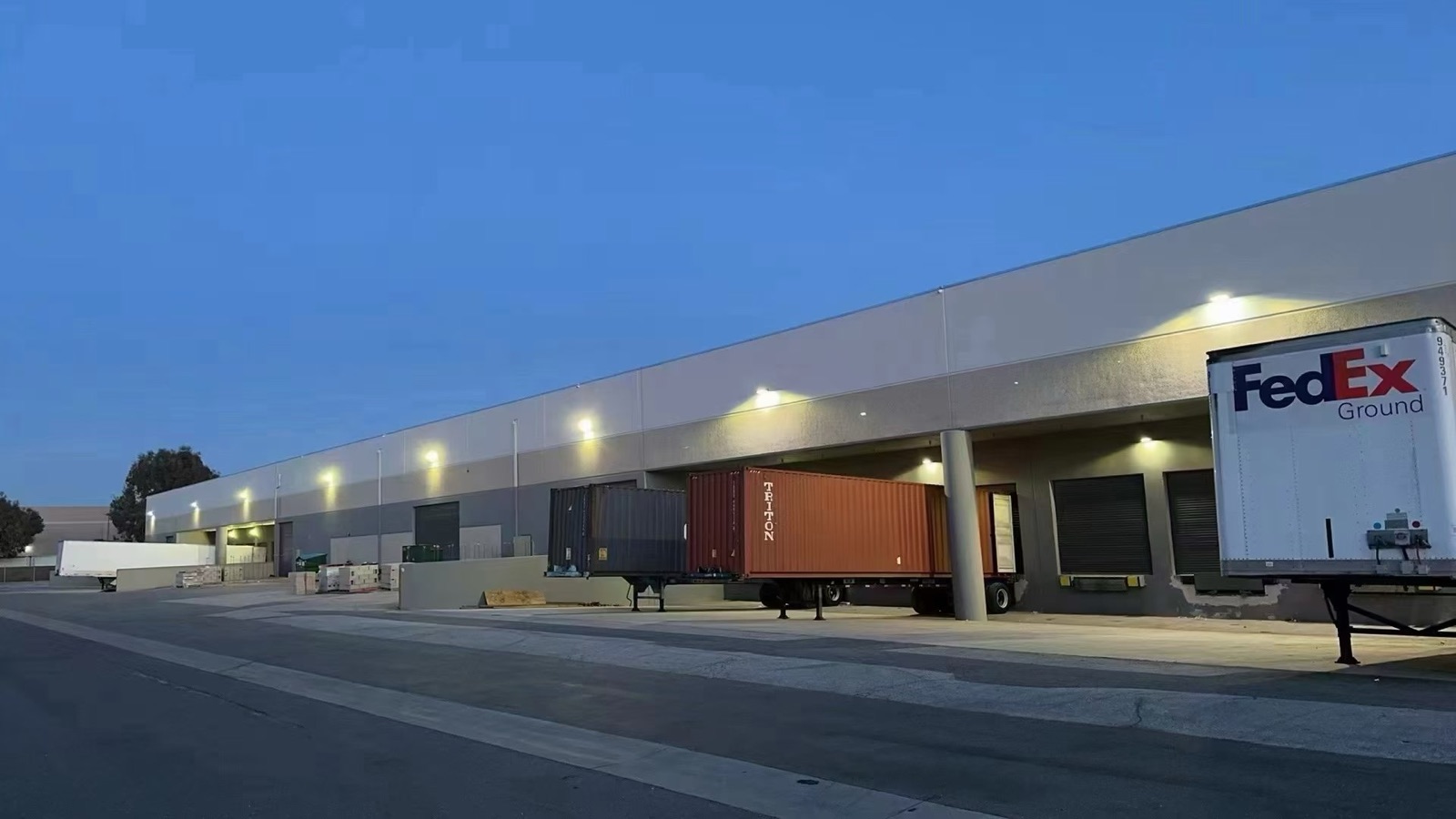
Our US warehouses hold inventory, re-label it and release it to the fulfillment center when your appointment window opens — instead of paying Amazon storage on stock you cannot yet receive.
Both are quoted, but they are different products. The term is written into the quotation before anything is booked, and it does not change mid-shipment.
One landed number per kilo. Duty, Section 301 tariffs and import clearance sit inside the quoted rate.
Freight and delivery are quoted; duty is billed to your own importer of record at destination.
These windows run from supplier pickup to the FC dock, including export clearance, freight, import clearance and the delivery appointment.
From October to December, appointments at US fulfillment centers are the variable, not the sailing. Book four weeks ahead of a peak window and the freight schedule stops being the constraint.
| Lane | Air | Sea LCL | Sea FCL |
|---|---|---|---|
| US West Coast | 7–12 days | 26–34 days | 25–32 days |
| US East Coast | 8–14 days | 33–42 days | 31–38 days |
| US Central | 8–13 days | 30–38 days | 28–35 days |
| United Kingdom | 6–10 days | 30–38 days | 28–34 days |
| Germany | 7–11 days | 32–40 days | 30–36 days |
| UAE (Dubai) | 5–9 days | 22–28 days | 20–26 days |
Planning windows, not guarantees. Customs inspection, carrier rollovers and FC appointment availability all move the final date; the expected window is confirmed in writing with the quotation. Ocean space is booked with Maersk, CMA CGM, COSCO, Hapag-Lloyd and ZIM; air capacity with Emirates, Qatar Airways and Cathay Pacific.
Every rejection we see comes from one of these five. All of them are visible before the carton is sealed.
Covered UPC, curved surface, low-dpi print, or tape laid over the label. A scanner that fails once sends the carton to problem solve.
Under 1.5 mil, no printed suffocation warning, or a barcode that cannot be read through the bag.
Without a Team Lift label the dock will not lift it. With the label, a single heavy unit is accepted — a heavy multipack is not.
Each carton label names one fulfillment center. Redirecting freight without changing the plan creates the mismatch at receiving.
Loose units, individual barcodes still visible, no “sold as a set” mark. Amazon receives it as separate products.
FBA is a fulfilment channel, not a storage strategy. Where the stock sits decides what you can still fix after it arrives.
Most sellers we work with run both: a buffer in the warehouse, a rolling replenishment into FBA, and the prep done where it is cheapest — at origin.
Five checkpoints, each confirmed with you before the next one starts.
Supplier address, destination FC code, carton count and the date the stock must be received.
Goods received, counted, prepped, weighed and labelled; export declaration filed in China.
Ocean or air to the destination port or airport, with tracking shared as it moves.
Duties and taxes settled under the agreed term; customs release confirmed in writing.
Appointment booked where required, cargo handed over, POD and signed receipt returned to you.
Short answers to what sellers ask before the first booking.
From 1 January 2026 Amazon no longer offers prep or item labelling for FBA shipments in the US store. Sellers now have to send units that are already labelled, bagged and packed to Amazon’s specification. In practice the prep moves to the factory or the origin warehouse, which is also where it costs least.
Yes. We deliver to the address or FC code on your shipment plan, and book the delivery appointment where the centre requires one. Send the FC code and we confirm the route before booking.
Yes — DDP is the most common term we quote for FBA, meaning duties and import clearance are included in the price. If you prefer DDU, we quote that as well and make clear which costs stay on your side.
We print and apply FNSKU labels, bag, bubble-wrap, bundle and re-carton at our Shenzhen warehouse. If your supplier can print labels during production, that is cheaper still — send the label file and we check placement and scan quality on arrival.
Prep is priced per unit, not per shipment. Basic labelling runs from about USD 0.08 per unit; full prep with bagging, warnings, bundling and inspection lands between USD 0.35 and 0.60. US prep centres charge USD 0.75–1.50 for the same work. Your quotation fixes the per-unit rate for the scope you need.
50 lb (22.7 kg) per carton and 25 in on any side for standard-size products. A single unit between 50 and 100 lb needs a Team Lift label, over 100 lb a Mechanical Lift label. Pallets are 40 × 48 in GMA, no higher than 72 in including the pallet, and no heavier than 1,500 lb.
Yes, provided every unit is individually prepped and the box content in your shipment plan matches what is physically inside. Mixed cartons are the most common source of reconciliation fees, so we count and photograph the contents before sealing.
Air to a US fulfillment center is typically 7–14 days door to dock; sea LCL 26–42 days depending on coast, plus the appointment. In the fourth quarter the appointment is usually the longer wait, so booking earlier matters more than upgrading the freight.
Under DDP, yes: duty is calculated against the HTS code of the product and paid by us as importer of record, including Section 301 tariffs where they apply. Under DDU the entry is yours, and we hand over the documents your broker needs.
We review the rejection reason with you, correct what can be corrected at our US warehouse, and re-book the appointment. Our team stays on the case until the stock is received.
LET’S PLAN YOUR SHIPMENT
From China to your destination.
Tell us what you need to move.
Send your shipment details by email, or talk with our team on WhatsApp. We’ll help you work through the route, preparation and delivery arrangements.
Not sure about the exact weight or dimensions? An estimate is fine.
* Required fields